

From Ivana Trump to Indonesia: Strange Burials and Graves Around the World
Learn about strange burials and graves around the world and the story behind them.
Table of Contents
Key Takeaways
- If you travel the world (whether virtually or in person), you will encounter many strange burial practices and rituals.
- This article discusses many of them, including babies buried in trees and 20,000 bodies buried under a famous New York Park.
- How will these burials impact your afterlife plans?
Introduction
The untimely death of Ivana Trump shocked everyone across all political aisles, with Donald Trump’s first wife succumbing to injuries from an accidental fall in her townhouse in New York City. But as shocked as everyone was by the news of Ivana’s death, they were even more stunned to learn where she was going to be buried.- at one of her ex-husband’s New Jersey golf courses.
While this final resting place sounds a little odd, especially considering that she and Donald Trump are no longer married, she officially joins a long line of strange burials in history and around the world. For Southern California families thinking about their own afterlife plans, these unusual stories might just inspire a more creative approach.
8 Strange Graves Around the World
Tree Graves
In Indonesia, when infants, still teething, perish, the Toraja people will create a little tree hollow and bury the bodies there, with a small, crude-looking wooden door over each set of remains. The Toraja believe that this offers the dead the opportunity to become one with nature, a gentle fate given their young age.
The process is as follows:
- A living tree is chosen, and a small cavity is carved into the trunk
- The infant’s body is wrapped in a cloth and placed in the hollow
- The opening is covered with palm fiber or wooden panels, similar to doors
- As the tree grows and heals, it will close over the cavity, allowing the child to grow with the tree
In this tradition, the tree is seen as a nurturing mother who continues the baby’s life, ensuring the child is not abruptly separated from the world.
Sports Stadium Burials
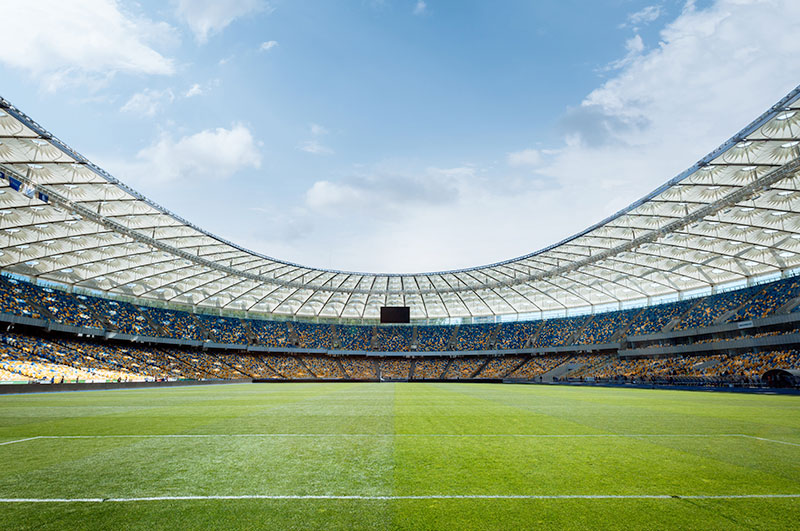
Love sports? You may dream of having your ashes interred at a famous sports stadium. This was once a possibility thanks to the Vicente Calderon Stadium in Madrid, Spain.
While the stadium was open, 1966-2017, fans could have their ashes stored in a dedicated space beneath the stadium’s stands. When the stadium was demolished, the columbarium holding soccer fans’ ashes was transported to the Wanda Metropolitano Stadium so these superfans wouldn’t ever miss a game. Los Angeles sports fans might appreciate a similar sentiment — though scattering ashes at stadiums requires special permits in California.
In a Road Median
When Nancy Kerlin Barnett was buried in 1831, her final resting place was a grassy hill near the Sugar Creek area of what is now Johnson County, IN. The hill became a small pioneer cemetery where other local settlers were also buried.
When a road was slated to be built on this spot some 70 years later, her family refused to move her grave. The road builders respected the family’s wishes and built a road around the grave rather than disrupt it, placing a tombstone in the median.
That road is now Indiana State Road 37, and travelers passing by can pay their respects as they drive along.
The Most Popular Cemetery in the World
Not sure where you want your final remains to be? Want to share a plot near Frederic Chopin and Oscar Wilde? Then you’ll want to try to secure a spot at Père Lachaise Cemetery in Paris, France.
When this cemetery opened in 1804, it broke all the rules. Standing out from typical crowded churchyard cemeteries, it featured wide avenues, winding paths, terraced hillsides, and rich greenery, ideal for reflection and sightseeing. No wonder so many famous people wanted to be buried there!
Over the years, the cemetery continued to evolve with tombs that look like a sculpture museum and historic war memorials. 3.5 million people visit each year, and while there are spaces available, it’s pretty tough to get a plot.

When planning a trip to Pere Lachaise Cemetery, focus on one theme instead of trying to see everything. The space is huge. As such, it’s also best to purchase or download a map.
Respect the fact that the cemetery is still in use. Don’t sit or pose on the tombs, keep your voice low, and don’t leave non-biodegradable items on the graves. The best time to visit is in the morning or late afternoon, as these times are ideal for quiet reflection and photography.
On an Airport Runway
If you’ve ever flown into the Savannah/Hilton Head International Airport in Georgia, then you’ve probably landed on the grave of Richard and Catherine Dotson.
The Dotsons weren’t flight enthusiasts—they just happened to be buried there before the military appropriated the land in the 1940s, and it became a place for the Army Air Corps to train. As part of a cemetery, most graves were moved, but Catherine, Richard, Daniel Heuston, and John Dotson stayed there as per their family wishes.
Today, visitors landing at the airport from 20,000 feet can see the crossing runways resembling a giant cross with the graves at the intersection.
Washington Square Park in New York City
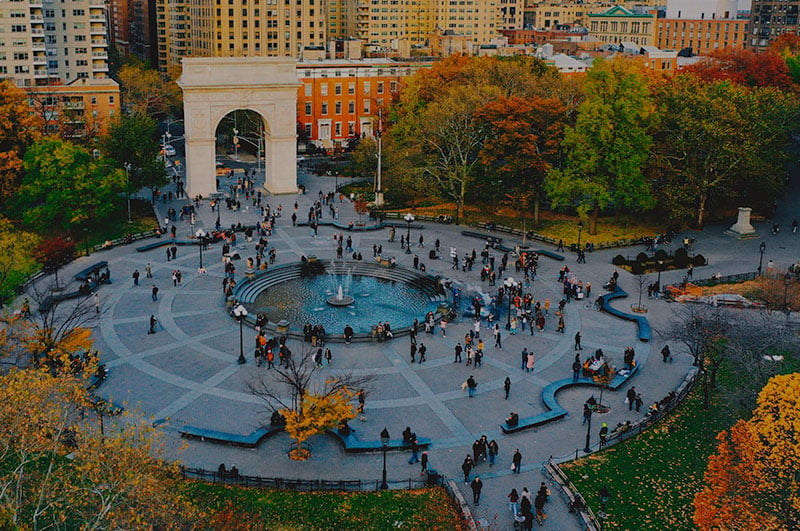
Washington Square Park is a popular destination for tourists and locals alike. Located in the heart of the NYU campus, it’s a place people gather to play music, host events, and hang out with the alternative crowd that thrives in New York’s West Village.
Little do many visitors realize thousands were buried under the surface in the late 18th and early 19th century when the site was a potter’s field—a burial ground for people who were poor, criminals, or who perished from an epidemic. Many of the individuals buried here were believed to have died from yellow fever. Poor and unclaimed, they were often stacked in long pits and covered over.
In the 1820s, New York was growing, and the city decided it needed something more respectable than a potter’s field. The site closed in 1826, and the park was built over it, but very few of the bodies were removed. It is believed that close to 20,000 bodies still remain.
Utility workers occasionally uncover skeletal remains, and archaeologists have confirmed they are consistent with the potter’s field site.
“While estimates vary, it seems likely that over 20,000 people were buried in the land… the bulk of the bodies were never disinterred, which means they remain to this day under the grass and pavement of Washington Square.”
Michelle Nevius and James Nevius, from the guidebook Inside the Apple: A Streetwise History of New York City
In a Restaurant
The New Lucky Restaurant in India gives a whole new meaning to food that’s “to die for.”
The restaurant started as a tea cart located next to a cemetery. When the business became more popular, the founders decided to build a restaurant on the land, but would keep the graves rather than disturbing them. Today, there are 12-26 graves throughout the restaurant, providing company for diners as they eat.
Although some may find the atmosphere eerie, most diners call it ‘auspicious’. The staff leaves flowers on the graves, and visitors often drape cloths (chadars) over them and make wishes. The environment is considered lucky, hence the name.
Behind a Walmart

Not many would choose Walmart as a final resting place. For the historic Crowley graveyard, it was just happenstance.
The Crowley family settled in Decatur, GA, in the 1800s, and used their farmland as a burial ground for family members over the years, as well as some enslaved people. In the 1960s, the land was sold for the construction of the Columbia (later Avondale) Mall. Rather than displace the bodies, the developers built a mausoleum structure around the cemetery, which served as an island in the middle of the parking lot.
Avondale Mall closed in 2001 and was replaced by a Walmart. Due to the new construction, the mausoleum is now behind the shop rather than being a central focus.
If you plan to visit these grave sites, treat them as active graves, not props. Check local customs and beliefs, and dress and act appropriately. Ask before taking close-up photos. When visiting grave sites in working spaces, stay out of restricted areas, follow safety signs, and avoid disrupting normal activities.
Strange Graves at a Glance: What They Mean, How to Visit, and What They Might Teach You
| Site/Burial Type | What Makes It Unusual | Tips for Visiting | How It Might Inspire Your After-death Plans |
| Toraja Tree Graves, Indonesia | Infants are buried inside living trees so they can grow with them | Go with a local guide, dress as you would for a funeral, don’t touch the trees, ask before taking photos | Consider a nature-themed after death plan such as planting a memorial garden or using a tree as a headstone |
| Vincente Caldero Sports Stadium, Madrid | Fans ashes were kept in a columbarium inside the stadium and later moved to another venue | Book a tour to learn more about the ashes, don’t expect to see the ashes themselves, expect plaques and stories instead | Tie your after-death plans to a passion, such as a music venue, hiking trail, or a club rather than a traditional cemetery |
| Nancy Kerlin Barnett grave, road median, Indiana | A single pioneer grave left in place, now sitting in the middle of the highway | Prioritize safety, appreciate it from a distance, look for a historical marker instead of entering the median | May help you consider what arrangements would be made if your gravesite was moved |
| Pere Lachaise Cemetery, Paris | A ‘city of the dead’ featuring the final resting places of various celebrities as well as elaborate mausoleums and memorials | Bring or download a map, focus on one theme rather than trying to see the entire cemetery, avoid disrupting funerals and acting inappropriately | Can help you determine if you’d rather have a private after-death site, or a glamorous one |
| Dotson graves on the runway of Savannah/ Hilton Head Airport | Two headstones set directly into an active commercial runway, other graves in the adjacent grass | There is no safe public access, but if you’re flying in, you may ask the crew to point it out as you descend | May inspire you to develop flexible plans for after death |
| Washington Square Park, NYC | A popular park converted from a potter’s field were 20,000+ were buried | Join a walking tour, look for plaques | Causes you to think about documenting your wishes so you are remembered in a respectful manner |
| New Lucky Restaurant, Ahmedabad, India | A busy café built around old Muslim graves | Let staff model the behavior, don’t rest cups or bags on tombs, ask before taking pictures | You might realize you’re comfortable with a resting place woven into everyday life |
| Crowley Family Cemetery, behind Walmart, Decatur, GA | A 19th century family burial boxed into a concrete mausoleum behind a modern big-box store | It’s somewhat hidden and prone to vandalism, avoid climbing on the structure, find out about guided visits | May make you think of who will maintain your grave |
About Opal Cremation
Opal Cremation knows a loved one’s passing can be emotional and overwhelming. Our goal is to be there for the Los Angeles and Orange County families of the departed as they navigate this difficult experience. We provide several all-inclusive service packages that can be customized to meet each family’s needs.
For added convenience, clients can arrange cremations entirely over the phone, as our dedicated care team will guide you through every step of the process and answer any questions that come up along the way. We’re ready to help you 24 hours a day, 7 days a week.
We know the stress of cremation arrangements can take a heavy emotional toll on family and friends. Let Opal Cremation lighten that burden.
Contact us with questions, or visit our support center, where you’ll find frequently asked questions regarding cremation as well as other helpful resources.
FAQs

Are there any health risks from old graves under parks and buildings?
Health risks are low. Pathogens caused by epidemics do not remain infectious in soil over long periods of time. There are more concerns about archaeological and historical preservation and respect for the descendants and community than about health threats.
Can people still choose unusual burial options for themselves today?
Yes, people can choose unusual burial options, especially with cremation. For example, ashes can be sprinkled into gardens, incorporated into jewelry used as Parting Stones, and even set off as fireworks. Various celebrations of life are also popular.
Can I actually visit all the sites mentioned in the article?
You can visit Pere Lachaise Cemetery, Washington Square Park, New Lucky Restaurant, the Crowley Cemetery, and the Toraja region in Indonesia. The Dotson grave, Nancy Kerlin Barnett’s grave, and the stadium ashes can be viewed from a distance or under specific circumstances.
Are these burials really strange, or just unfamiliar?
While these burials may seem strange from a North American or Western European perspective, in other cultures, they are logical responses to beliefs about the soul and nature or practical solutions to crowding, public health, and land use.
Why do some graves end up in such odd places?
Graves typically end up in odd places due to land-use changes, legal and ethical limits on moving bodies, and deliberate choices to keep them in place.