

The History of Death Culture in the Black Community: Celebrations of Life, Superstitions and Rituals
Black people have long been marginalized in life and death. As a result, they built businesses and created customs to ensure their friends and family members were remembered and treated with respect. In this sense, they shaped a death culture in the Black community that has significantly impacted the funeral industry in Southern California and throughout the world.
Table of Contents
- Introduction
- African Americans Become Leaders in the Post-Civil War Funeral Industry
- Death is Something to Celebrate
- Other Death Rituals
- Death-Related Superstitions
- Black Funeral Traditions
- The Importance of Community
- Key Milestones in Black Death Culture in the Funeral Industry
- Opal Honors Cultural Diversity in the Funeral Process
- FAQs
- Additional Resources
Key Takeaways
- Black people are often marginalized in life and death. Various rituals, superstitions, and ceremonies have developed over the years, guiding how blacks honor their dead, ensuring they get the respect they deserve.
- The outlook on death culture also inspired many Black people to open funeral homes, ensuring their dead were treated properly. These funeral homes became a driving economic force, bringing communities together.
- This article explores the various rituals and superstitions that arose from discrimination and the need to honor the dead, as well as other external influences.
Introduction
Throughout history, Black people have dealt with marginalization and discrimination, sometimes to the point of violence. During times of slavery, they were treated poorly, beaten by their masters, and didn’t receive healthcare, leading to untimely deaths. Many feel that type of discrimination continues today through police brutality, reduced access to medical care, and limited health resources in low-income communities.
Discrimination and marginalization often continued into death. Slaves were buried in unmarked graves. White funeral homes rarely accepted Blacks, and if they did, their bodies were not treated properly.
Blacks rebelled by determining their own ways to honor their dead, ensuring they were remembered. But their rituals and superstitions were not solely an act of rebellion. They were also shaped by other religions and cultures, and by stories handed down through the years.
Join us on this fascinating journey through time as we explore the origins of Black death culture.
Death Culture in the Black Community During Times of Slavery

Although slavery peaked in the 1780s, it had been going on much longer, tracing back to the 1480s -1500s when the Portuguese began enslaving Black Africans. Throughout these centuries, slaves were treated poorly. They were beaten, exposed to dangerous situations, and had little access to health care.
With a life expectancy of 21.4 years, as compared to the white life expectancy of 25.5 years in 1850, death was no stranger, and Black communities often experienced grief. However, slave owners did not give them a chance to mourn properly. They thought funeral gatherings could serve as an opportunity to plan a resistance.
Rather, they would bury dead slaves in unmarked graves, offering a very dishonorable and unremarkable ending to their lives.
However, at night, ‘hush harbors’ were held, allowing Blacks to grieve, mourn, pray, or perform rites in secrecy. They would find their loved one’s unmarked graves and mark them with stones or glass. The communities would grieve, express their emotions, and celebrate the lives of the people they had lost, supporting them on their journey ‘home’.
Death as a Celebration of Life
Times of slavery shaped Black funeral culture in many ways. First, rather than mourning, the loss of a loved one was often viewed as a celebration of life. It made sense, as they celebrated their loved one’s freedom from a life of misery.
They also honored their loved one as they returned to their maker. Hence, these celebrations were called a homegoing event. During these events, people would sing and dance, although many also grieved their loss.

If you have never attended a traditional Black funeral, expect a lot of emotions, crying, and wailing. People are not encouraged to hold it together. They express what they feel.
African Americans Become Leaders in the Post-Civil War Funeral Industry
Another development that grew directly from slavery was the establishment of Black funeral homes.
During times of slavery, funeral homes were mostly run by white people. These businesses wouldn’t accept black bodies, or, if they did, they would not treat them properly.
After the Civil War and the abolition of slavery, one of the first businesses established by African Americans was a funeral home. Although these businesses offered economic stability, they also ensured that Blacks were treated properly after death.
In these funeral homes, bodies were treated with great care. They were washed, dressed in white or Sunday best, and buried with meaningful items.
Embalming, if necessary, followed the correct procedures, an update from past practices in which embalming was done carelessly for Black individuals.
African American-run funeral homes also often cater to the needs of the Black community according to traditions and rituals passed down for generations.
Today, thanks to the National Funeral Directors and Morticians Association, funeral homes are held to higher standards, and bodies of all colors are treated with greater respect.
The Importance of Community in the Black Funeral Industry
Community is a popular theme in Black funeral culture, even shaping how African Americans run funeral homes. These family-owned businesses often operate through word of mouth and foster relationships within the community. They often don’t use traditional marketing, and their existence depends on loyalty.
More often than not, Black funeral directors are also community leaders whom everyone knows, counselors whom families would go to for support and guidance. They are more than just funeral directors; they are the foundation of a community that supports families through the death of a loved one.
In 2016, The Atlantic published a piece on Black funeral directors and how Black-run funeral homes are struggling to survive in new markets. The worry is that if these institutions close, some of these historically Black traditions may disappear. Over the course of more than 100 years, Black funeral homes have offered comfort, understanding, and a sense of belonging to Black families when they needed it most.
“Culture and practice and ritual are known and remembered in a Black funeral home, and that matters in a time of grief.”
Karla F.C. Holloway, a professor of English, law, and African studies at Duke University, from the article The Disappearance of a Distinctly Black Way to Mourn

Other Death Rituals
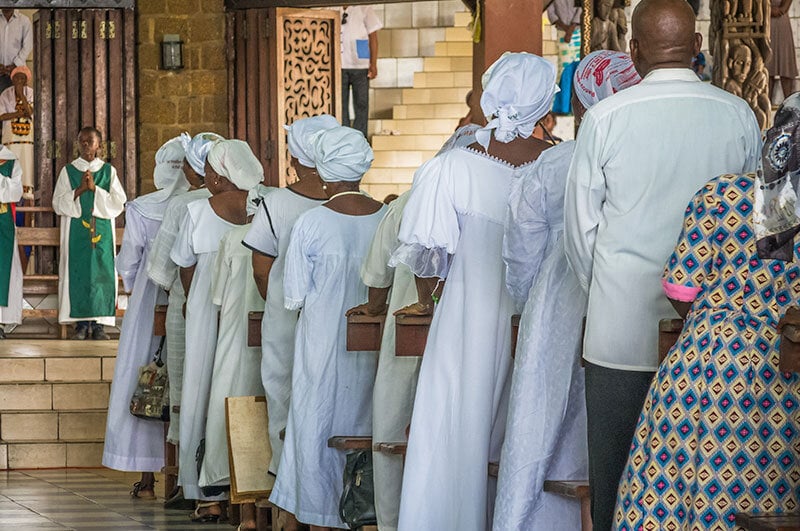
While many Black death rituals grew out of slavery, others were passed down through generations. They vary by region and upbringing. Here are some that are worth noting.
- It’s a Communal Affair: When someone in the Black community passes away, every family member and friend of the deceased is informed, and everyone is expected to attend the funeral. If someone is unable to attend, they might postpone the funeral to a more convenient date.
- The Ring Shout: This ritual involved people moving in a circle, singing, clapping, and calling out responses, to demonstrate unity.
- Jazz Funerals: Popular in New Orleans, these celebrations of life began with slow hymns and somber music. Once the burial concluded, the band would shift to more uplifting tunes, signaling the soul had reached peace, and people would dance and sing in the streets.
- Gospel Songs: Often used in religious settings, gospel lets people know they are not alone in their grief.
- Feet Facing East: A popular Black tradition involves burying bodies with the feet facing east so the deceased can rise on Judgment Day. This ritual is honored throughout Christianity.
- Coins on the Eyes: Not specific to Black communities, coins are often placed on the eyes after death to keep them closed during embalming and mortuary procedures.
Death-Related Superstitions
Superstition surrounding death is another thing that exists in Black culture. Here are some to be aware of:
- The Weather Plays a Role: It is generally believed that it is bad luck to bury a body on a rainy day. When it’s sunny with blue skies, that signifies that heaven is open to the deceased and ready to accept them. If someone is on their deathbed and it’s raining and/or lightning strikes near where they are, then that means that the devil is taking their soul.
- Offerings are Helpful: Many people in the Black community believe spirits linger near the body and require guidance to make a peaceful transition. In West African traditions, disturbing a grave could unleash a restless spirit. Offerings and rituals protect people from these spirits, leading to a sense of spiritual harmony.
- Graveyard Soil: In the hoodoo tradition, graveyard soil, powdered bones, and herbs were used to make ‘goofer dust’. When used maliciously, the dust could cause sickness and misfortune, but could also protect against evil. Therefore, graveyards were places of great respect and reverence.

Black Funeral Traditions
With most Blacks identifying as Christian, it’s customary for them to have traditional funerals that involve a wake before a funeral. However, in modern times, cremation is becoming increasingly widely accepted as a funeral service. An NFDA report reveals that cremation rates were 63.4% in 2025, compared with 31.6% for burials, and are expected to reach 82.3% by 2045.
While Blacks may have initially resisted cremation, it’s becoming more popular in modern times. It also opens the door for families to host a celebration of life at a later date, a custom long popular in Black culture.
Black families often want their pastors and church involved in the funeral. If this is the case, reach out to your religious leaders early in the process. They will assist with planning and ensure everything aligns.
Key Milestones in Black Death Culture in the Funeral Industry
This chart provides a quick look at how Black death culture evolved over the years.
| Period/Era | Historical Moment | Impact on Death Culture |
| Enslavement (1500s – 1865) | Enslaved people buried in unmarked graves and celebrated with hush harbors | Covert mourning in response to forced invisibility in death |
| Civil War (1861-1865) | Mass deaths leading to an increased demand for funeral industry workers | Birth of a formal funeral industry that makes rooms for Black funeral homeowners and directors |
| Reconstruction & Jim Crow (late 1800s to 1950s) | Emergence of Black funeral homes | Funeral homes become trusted black institutions |
| Great Migration (1916-1970s | Millions of Black families move North and West | Traditions blend bringing Southern customs to urban centers |
| Civil Rights Era (1950s-1970s) | Highly public funerals (e.g. Emmett Till), used as a protest statement | Mourning becomes spiritual and political, serving as a form of resistance |
| Late 20th Century | Growth of the Black middle class and diversity | More variations in how homegoings look, ranging from traditional to contemporary celebrations of life |
| 21st Century | Rise in cremations, online memorials, and a changing funeral landscape | Homegoing traditions adapt with cremation and digital tributes putting pressure on traditional Black-owned funeral homes |
Opal of Southern CaliforniaHonors Cultural Differences In the Funeral Process
At Opal, we understand that people have different cultural beliefs. We aim to honor each with respectful service. Our direct cremation in Los Angeles and Orange County allows families to move on from death and plan a celebration of life that best honors their loved one.
We can also guide you in the right direction when choosing how to honor your loved one. Our team offers recommendations for sea scatterings, ash jewelry, cremation diamonds, cremation fireworks, and parting stones. We ensure transparent services that reduce stress during difficult times.
Contact us to learn more about our direct cremation services in Southern California.
FAQs

How can people outside the Black community engage with these traditions respectfully?
People outside the Black community can engage in traditions respectfully by listening more than speaking, avoiding stereotypes, asking permission to participate, and recognizing that these practices come from histories of trauma, resilience, and faith.
Why is death and mourning such an important part of Black culture?
Death and mourning have become an important part of Black culture due to enslavement, segregation, racial violence, and systematic inequality. Death has become a constant presence in Black lives. Mourning and rituals have become a way to resist dehumanization, preserve dignity, build community, and affirm Black Lives Matter.
What role does music play in Black funerals and memorials?
Gospels, hymns, spirituals, and even jazz help people express their emotions, connect to their ancestors, and provide comfort. Rituals like call-and-response, clapping, and communal singing bring communities together, letting them know they are not alone in their mourning and healing.
Why are funeral homes so significant in the community?
Black-owned funeral homes emerged during segregation, when white funeral homes would refuse to care for Black bodies or treated them poorly. They became centers of economic independence and cultural preservation and remain trusted institutions to this day.
What is a repast, and why is it important?
A repast is a meal shared by family and friends after a funeral or burial. It offers emotional support, fellowship, and a place to share stories and memories. The meal sustains the living while honoring the dead.