

What Is Direct Cremation? A Guide for California Families
Written by Troy Centazzo, Founder and CEO, and Marissa Bergen, Marketing Director, Opal Cremation
Reviewed by Anthony Kaniuk, Director of Industry Relations, National Funeral Directors Association (NFDA)
What is direct cremation, and what does it really cost in California? This plain-English guide breaks down the process, explains your options, and helps you avoid common pricing pitfalls.
Table of Contents
- Key Takeaways
- Introduction
- What Is Direct Cremation?
- Benefits of Direct Cremation
- When Direct Cremation May Not Be the Right Choice
- Who Provides Direct Cremation Services in California?
- Beware of Misleading Cremation Pricing and Hidden Fees
- All-Inclusive Direct Cremation Packages in California: Additional Costs and Comparing Apples to Apples
- Opal Research into the Cremation Pricing Practices of California Funeral Homes
- Step-by-Step: How Direct Cremation Works
- Legal Requirements in California
- What Happens After Cremation?
- How Opal Can Help
- Frequently Asked Questions
- Additional Resources from Opal
- Free Downloadable Planning Tools
Key Takeaways
- Direct cremation is a simple, no-frills cremation without a formal ceremony.
- It is the most affordable and flexible end-of-life option available.
- California families can save thousands by choosing direct cremation over traditional burial.
- The process includes legal paperwork, transportation, cremation, and return of ashes.
- Estimating the actual cost of direct cremation can be challenging due to hidden fees and surcharges. Opal provides lessons and tools on how to do so.
Introduction
So, what is direct cremation?
This “no-frills” basic cremation service in California is a cheaper alternative to traditional cremation and burials. However, complex price structures can complicate the process.
For example, you’ve probably noticed a wide range of prices for “all-inclusive” direct cremation services and wondered why cremation prices vary so much.
This Opal Guide provides the answers Los Angeles and Orange County families need.
What is Direct Cremation?
For families who have lost a loved one, direct cremation, which is a legal term for simple cremation or basic cremation, offers a straightforward and affordable option. It simplifies the process by eliminating embalming, viewing, and a formal funeral service.
Additionally, direct cremation provides a family more time to plan a memorial service or celebration of life. Funeral arrangements don’t have to be completed within 48 or 72 hours of a loved one’s passing, which can be extremely stressful for grieving families.
This guide covers everything you need to know about direct cremation, including what it is, how it works, what it costs, how to avoid hidden fees, and how it compares to traditional funeral options and other cremation services.
An In-Depth Look at Direct Cremation
Direct cremation is the industry term for a basic cremation service with no additional funeral services, such as embalming or a viewing. It is generally the most affordable option for consumers. Other common terms for direct cremation include:
- Simple cremation
- Basic cremation
- Low-cost cremation
You’ve probably seen the term direct cremation often while evaluating cremation services. Federal regulations require all US funeral providers, including funeral homes and cremation service providers, to include a separate price for direct cremation on their general price lists (GPLs). Every provider must also provide a GPL to consumers who inquire about services.
Direct cremation must only include the following:
- Removal of the deceased
- Transportation to the crematory
- Basic service fee
- Necessary authorizations
- Cremation itself
The service provider must also provide information about “alternative containers,” which are used to hold the body during cremation.
The Federal Trade Commission (FTC) implemented these requirements as part of the Funeral Rule, enacted in 1984. The rule was designed to ensure transparency, allow consumers to compare services and costs without hidden fees or misleading bundles, and learn about low-cost service options. It was enacted after years of complaints about deceptive practices and price opacity in the funeral industry.
Benefits of Direct Cremation
Direct cremation offers numerous benefits compared to other funeral and memorial service options. While the cost-effectiveness of direct cremation is key to its increasing popularity, it is not the only reason families select it.
The benefits of direct cremation include the following:
Less Expensive / More Cost-Effective:
- The median cost of direct cremation in the US is $2,024, while traditional funerals on average cost between $8,300 (NFDA) and $10,856 (Passare study), not including cemetery expenses, such as a plot and burial fees
- Money saved by selecting direct cremation allows families to plan a celebration of life at a later date
More Flexibility Than Traditional Funerals:
- Families can plan a memorial service on their own timeline, not within 48–72 hours
- Provides emotional and logistical “breathing room”
- Memorials and celebrations of life that follow direct cremation offer more personalized services focused on the deceased loved one
- Families can still hold “traditional” memorial services that include many elements of funerals
Simplified, Streamlined Process:
- No need for embalming, casket selection, public viewing, or formal funeral planning
Environmental Benefits:
- Uses less land and materials than burials
- Avoids embalming chemicals
- Modern cremation equipment emits fewer pollutants through air cleaning technologies
When Direct Cremation May Not Be the Right Choice
While direct cremation offers affordability and simplicity, it may not be the right choice for families seeking a more traditional or communal grieving experience. For some, the absence of a viewing, wake, or structured memorial service immediately after death can feel emotionally incomplete – or simply not align with their cultural values. Certain religions prohibit or discourage cremation in general.
Traditional ceremonial elements can offer meaningful closure and support, especially for cultures or faiths where traditional funeral rituals play a central role in honoring the deceased. While direct cremation can be followed by a traditional memorial service that incorporates elements of funerals, it is not always the right choice.
According to the National Funeral Directors Association (NFDA), in 2024, about 28% of funeral services in California involved traditional burial funerals.
Who Provides Direct Cremation Services in California?
Virtually all licensed “funeral establishments” in Los Angeles, Orange County, and throughout California offer direct cremation services. These include:
- Funeral homes
- National cremation companies with local offices
- Simple cremation service providers
- Cemeteries that also operate a funeral establishment
Step-by-Step: How Direct Cremation Works
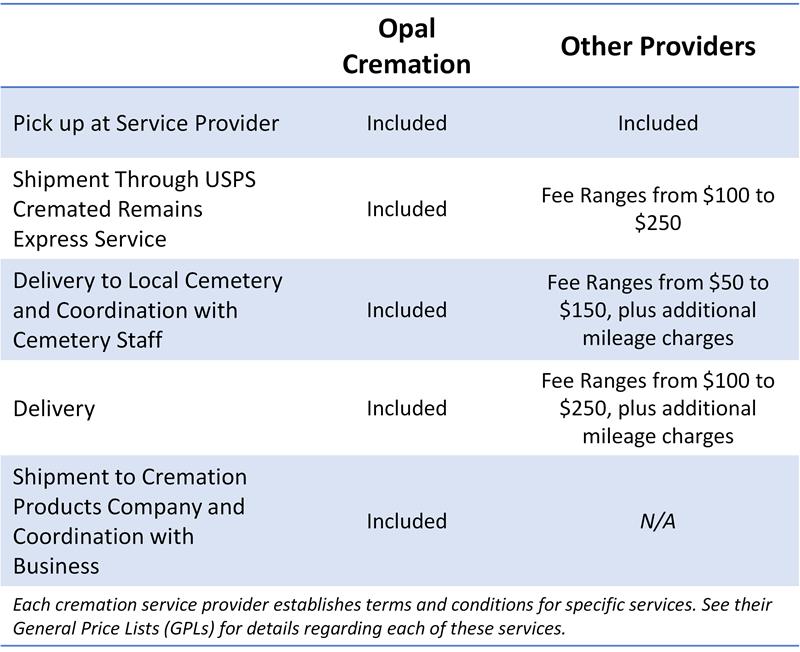
Direct cremation offers families an affordable, flexible service option. It involves the following steps.
- Contact a licensed cremation provider like Opal Cremation
- Arrange authorization and complete initial documentation
- Transfer of the deceased to the crematory
- Complete death certificate and other forms and filings
- The cremation process takes 2–3 hours
- The ashes are returned in a basic or chosen urn, by delivery or pickup
Legal Requirements in California
In California, several legal requirements apply to direct cremation. They include:
- Mandatory waiting period of 24 hours
- Completion of several forms and filings
- Completion of a Disposition Permit with details about the cremated remains
We’ll explain these requirements one by one.
Mandatory Waiting Period
California requires a waiting period of at least 24 hours after death before a cremation (source: Cal. Health & Safety Code § 7055(a)).
This is not usually an issue for Opal’s families, since it typically takes at least two days to secure a doctor’s completion of the death certificate. Also, it usually takes 2 – 4 days for families to decide on the memorial services they would like and complete the paperwork also required for cremation services.
Forms and Filings
All states have requirements related to legal documents and forms that must be completed before direct cremation. California requires several, including:
- Certified death certificate
- Cremation Authorization form
- Declaration for Disposition of Cremated Remains
These forms are completed by the deceased’s next of kin or authorized agent with the funeral director.
Disposition Permit
California law requires a permit for the final disposition of remains, no matter what type of farewell you plan—whether it’s a cremation with an urn to be kept at home, traditional burial, or scattering ceremony.
This requirement is outlined in California Health and Safety Code § 103050.
“Disposition of human remains shall not be made until a permit for disposition has been obtained from the local registrar of births and deaths.”
— Cal. Health & Safety Code § 103050
In this context, “disposition” refers to the legal method of handling human remains after death, including cremation, burial, scattering, or scientific donation.
In California, local registrars, typically the county department of public health or vital records office, issue these permits. Usually, a funeral provider will obtain this permit on the family’s behalf as part of their services. As of this writing, the fee for a disposition permit is $12.
Examples of Permitted Dispositions:
- Cremation with the ashes stored at home
- Traditional cemetery burial
- Scattering ashes in the ocean
- Donating the body to medical research
If your plans include a scattering ceremony, such as one held during a memorial or celebration of life, the permit must specify the method and location of the scattering. For example, a sea scattering permit must list the type (“at sea”) and the general area where it will take place (e.g., “off the coast of Orange County”).
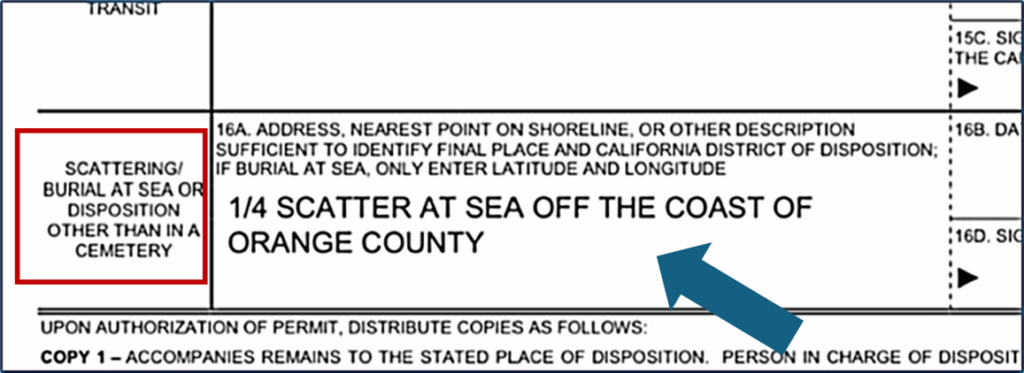
Note the “1/4” marked on the permit—this indicates that only one-quarter of the ashes will be scattered in that particular location. Under California law, each separate portion of cremated remains must have its own valid disposition permit. So if the ashes are divided, an additional permit is needed for every separate scattering or storage arrangement.
If the family doesn’t scatter the ashes right away—for example, they plan a ceremony several months later—they must ask the original funeral provider to update or reissue the permit to reflect the new date or location. While the state’s permit fee remains $12, funeral homes may or may not charge an administrative fee for this update.
 Opal Cremation provides these services free of charge, regardless of when a family decides to organize a scattering ceremony in the future.
What Happens After Cremation?
One of the most compelling benefits of direct cremation is the flexibility it provides to families when it comes to planning and holding a memorial for a deceased loved one. With direct cremation, a family can plan and host a memorial, such as a celebration of life, on their own timeline, whether that be weeks or months after the person passed away.
Compared to traditional funerals, which often must be planned within 48 to 72 hours after death, families usually benefit from the “emotional breathing room” that direct cremation provides. We often hear this from the families we’ve served.
Families are increasingly arranging these personalized, celebratory memorials themselves, and there are virtually unlimited ways for them to celebrate their loved ones.
Here are some ideas for memorial planning after the cremation process is completed, based on the families we’ve served – and celebrations of life we’ve organized for our own families:
- A two-hour ash scattering service on a boat off the coast of Southern California attended by 20 family members and friends, followed by a luncheon at a local restaurant
- A backyard celebration of life centered around a memorial garden created in honor of the deceased loved one
- A gathering at your loved one’s favorite park or outdoor space with music, where attendees can share their favorite stories and memories about them
How Much Does Direct Cremation Cost?
As stated earlier, direct cremation should be a low-cost option, saving families money due to the lack of a formal service, a casket, burial, land use, and embalming. However, many providers take advantage of families knowing they are emotional, have little knowledge of the funeral industry, and have to decide on an afterlife plan quickly. Therefore, families often pay an average of $220 more (based on our Orange County study) than the originally quoted price.
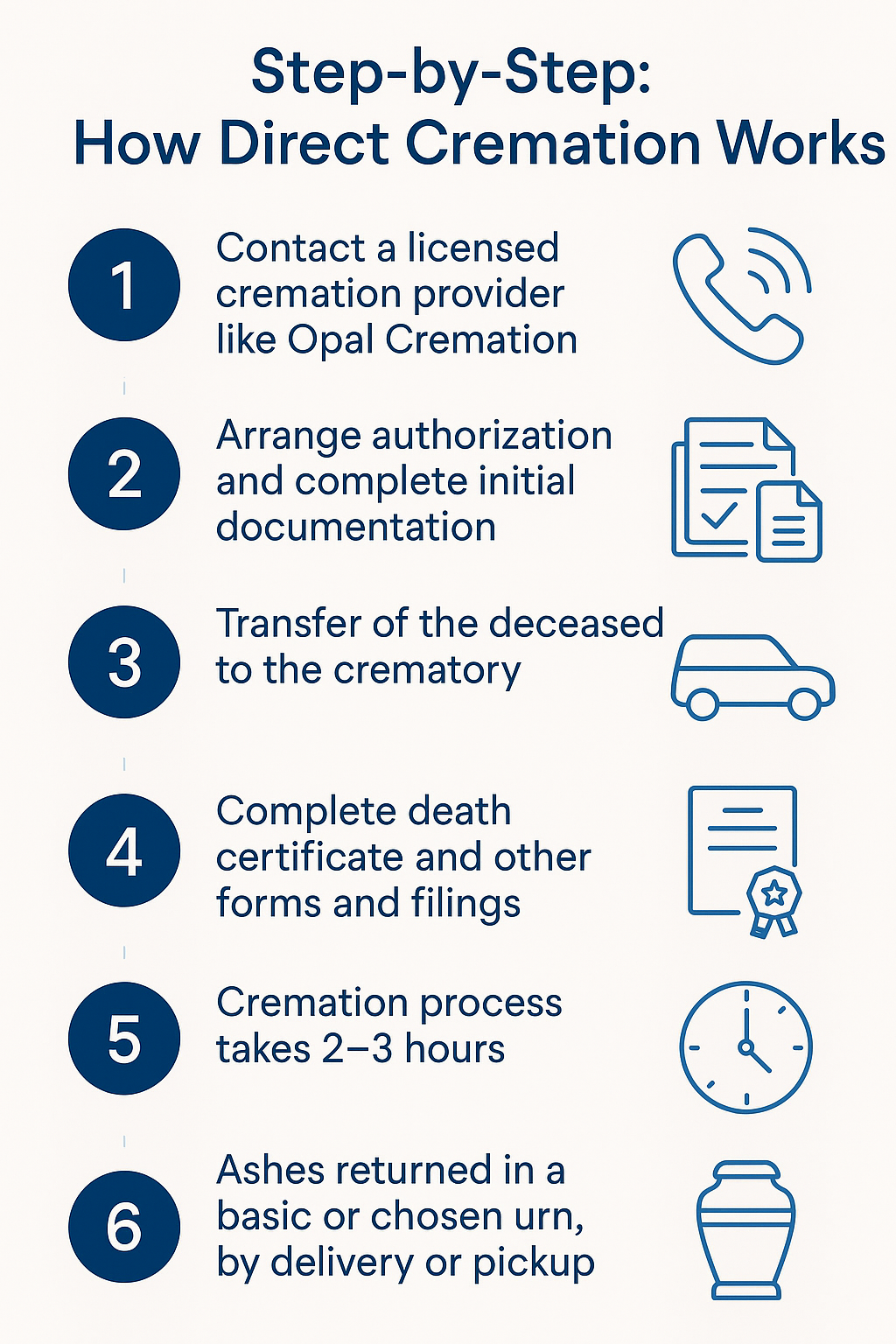
Many providers claim to offer all-inclusive pricing, but are often charged more for services that are left out of the initial package. These may include:
- Transportation Fees: If the deceased is located more than 20 miles from the crematory, the family will incur an additional fee of $4 per mile beyond that area
- Special Pickup Fees: If the loved one passed away at home or at a “board and care” facility, an additional fee of $200 will be added to the package price
- Overweight Fees: If the deceased weighs more than 200 pounds, an additional surcharge of $2 per pound over the maximum amount will be charged
- Pacemaker Removal: If a pacemaker must be removed, an additional fee of $150 will be charged
Preplanning can help families avoid these fees, as they have time to compare pricing when their judgment isn’t impacted by grieving. However, even preplanning does not make families immune to price fluctuations.
Look over general price lists (GPLs) carefully (a price list all funeral homes must provide customers who inquire about pricing) to determine how much you will pay for each necessary service. Consult online reviews to decide which companies are truly transparent.
How Opal Can Help

Our team is here to make a difficult time easier. With upfront, all-inclusive pricing, no hidden fees, experienced care professionals, and flexible memorial options, we’re California’s trusted source for simple, affordable cremation and planning for celebrations of life. Families in Los Angeles and Orange County can contact us to learn more or start arrangements today.
Contact us to learn more or start arrangements today. Call us at 888-963-2299 or send us a message, and we’ll respond immediately.
Frequently Asked Questions
How long does the direct cremation process take?
Generally, it takes 7–14 business days, including paperwork and ashes delivery.
Can I still have a memorial or celebration of life if I choose direct cremation?
Absolutely. In fact, many families prefer it. Direct cremation allows you to plan a memorial service on your own schedule and terms—whether it’s a small gathering at home, an outdoor celebration at one of Southern California’s many beautiful venues, or a formal service weeks later.
What’s the difference between direct cremation and cremation with a service?
Direct cremation includes only the essentials: paperwork, transportation, cremation, and return of the ashes—without a viewing or ceremony. Cremation with a service may include embalming, a casket, a wake, and a formal funeral or memorial. It’s often more expensive and scheduled within a few days of the passing.
Does direct cremation include a death certificate?
Not always. Some providers charge extra for certified copies of the death certificate. At Opal Cremation, we include one certified death certificate with every direct cremation package, and offer expedited processing and overnight shipping at no extra charge.
Can I witness the cremation?
Some providers allow it. Ask ahead of time.
Does hospice assist with direct cremation services?
Yes. Hospice staff often coordinate with cremation providers like Opal.
Can I prepay for direct cremation?
Yes. Many cremation providers offer prepayment options for direct cremation. Prepaying can lock in today’s pricing and reduce stress on your loved ones later. Review the terms carefully, including refund policies and transferability if you move out of state.
Is cremation allowed in all religions?
No. Some religions, such as Islam and Orthodox Judaism, prohibit cremation and require traditional burial. Others, like Catholicism and some Protestant faiths, now permit cremation but may have guidelines about how and where ashes are placed. If religious practice is important in your family, it’s a good idea to consult a faith leader before making final arrangements.

Additional Resources from Opal
Planning Celebrations of Life After Cremation
How To Plan an Unforgettable Celebration of Life
6 Celebration of Life Ideas in Los Angeles: Outdoor Venues
8 Celebration of Life Ideas in LA: Banquet Venues
Celebration of Life Events in Orange County: Special Places to Visit
7 Celebration of Life Ideas in San Diego
Ash Scattering Guides
Definitive Guide to Scattering Ashes in California 2025
Creative Memorial Options
How to Plan and Plant a Memorial Garden
Factual Guides
Debunking Cremation Myths: The Real Truth About Direct Cremation
Free Downloadable Planning Tools

1Opal Cremation, internal research project on actual total cost of “all inclusive” direct cremation packages in Los Angeles and Orange counties, April 2023. Unpublished.


